June 17: Louisbourg
Jul. 5th, 2008 12:57 am![[personal profile]](https://www.dreamwidth.org/img/silk/identity/user.png) kirkcudbright
kirkcudbrightFinally getting back to the Nova Scotia travelogue.
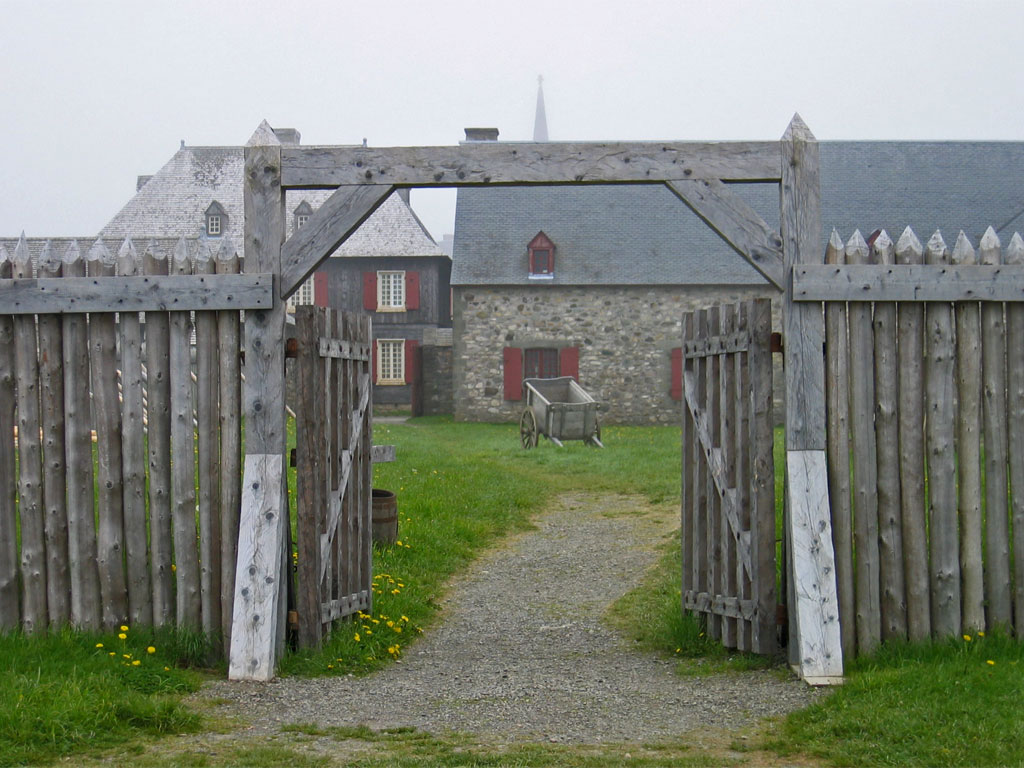
Lots of pictures from Louisbourg. This French fortified town on Cape Breton (Île Royale) was an important fishing and trading port, and also the linchpin to the defense of the St. Lawrence River (Quebec and Montréal). However, it was perennially under-garrisoned, and weakly fortified on the landward side, so it was taken by the British (mostly New Englanders) in 1745, returned in the Treaty of Aix-la-Chapelle in 1748, taken again by the British in 1758, and blown up to prevent re-return to the French. (Not coincidentally, the British went on to take Quebec and Montréal.) There it lay for two centuries, until about a quarter of the town was reconstructed in the 1960's.
The 250th anniversary of the Second Siege of Louisbourg is currently being commemorated both here and in Halifax (the main British naval base in the region).


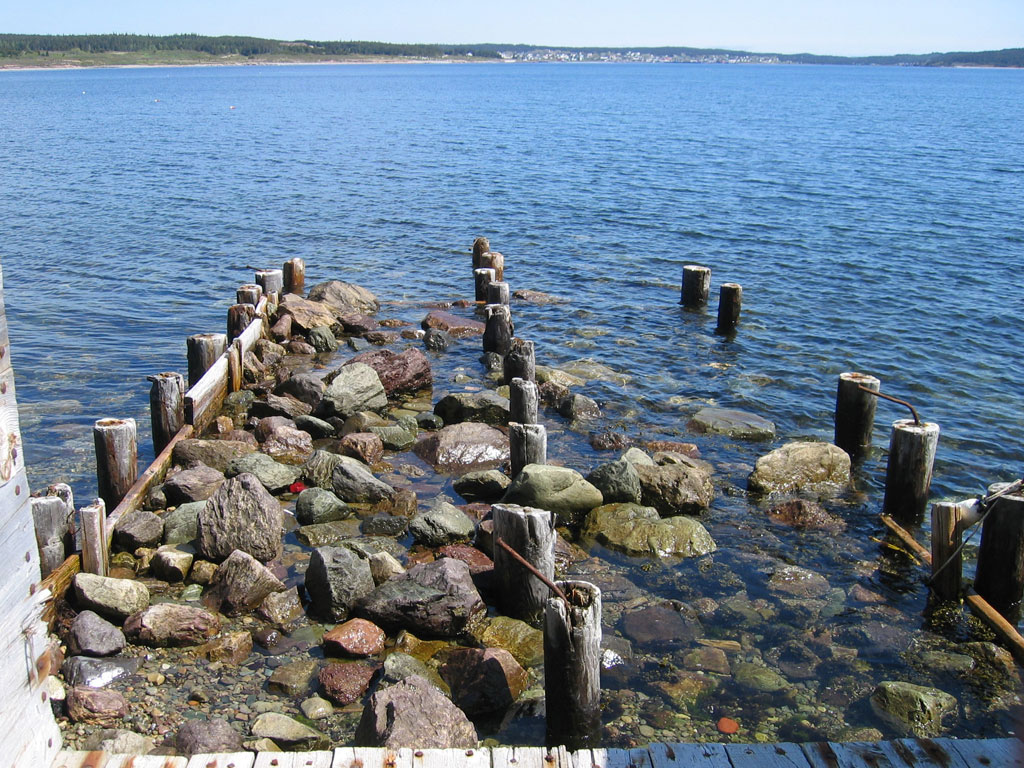
The seaward defenses.

The landward defenses.

Fisherman's hut, actually outside the town walls.


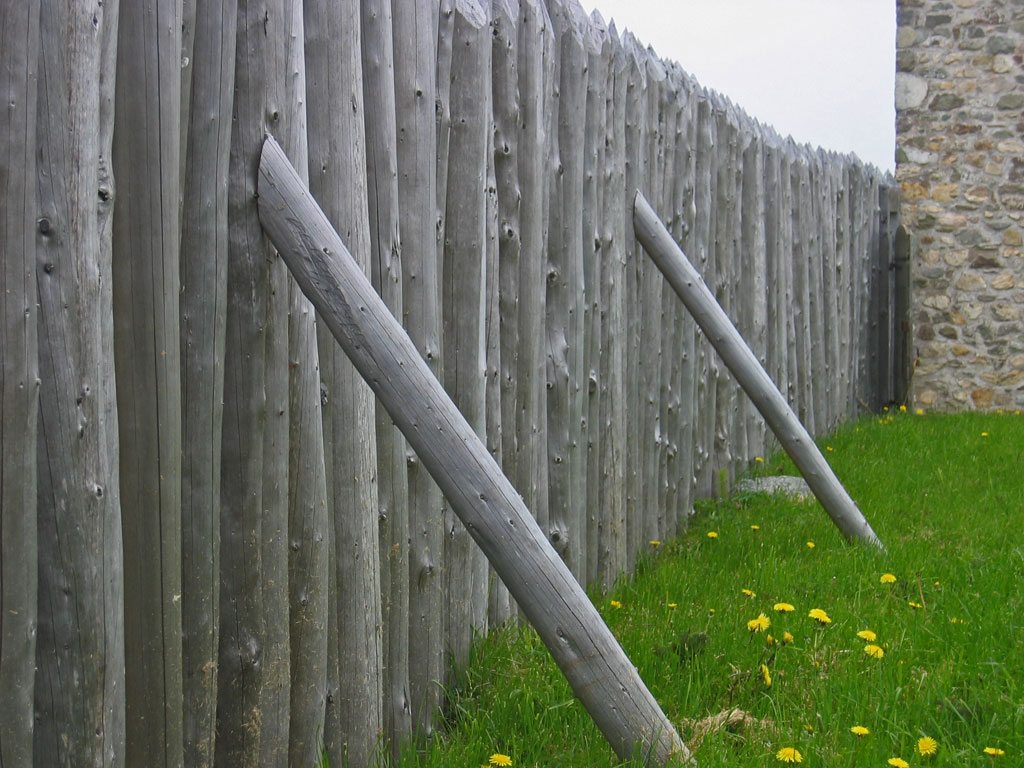
These are not wooden walls, but wooden sheathing over masonry walls, to protect the crappy 18th century-style lime mortar.


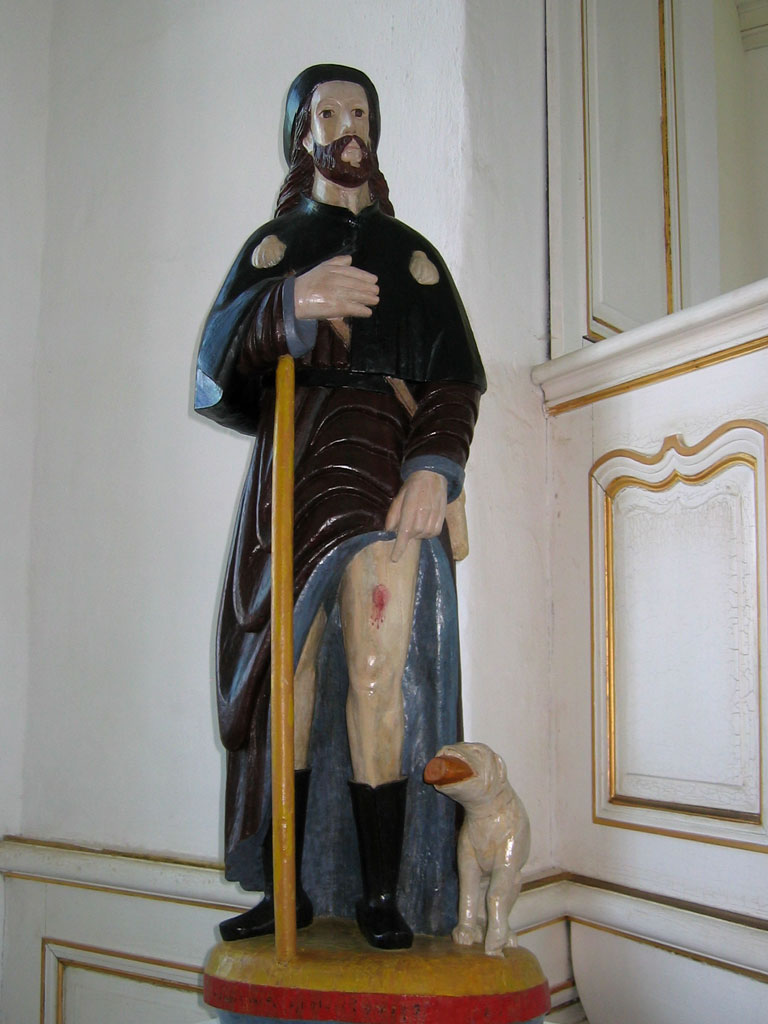
In the chapel. No, I don't know which saint this is, why he has a wound on his leg, or why the dog is carrying a sausage.

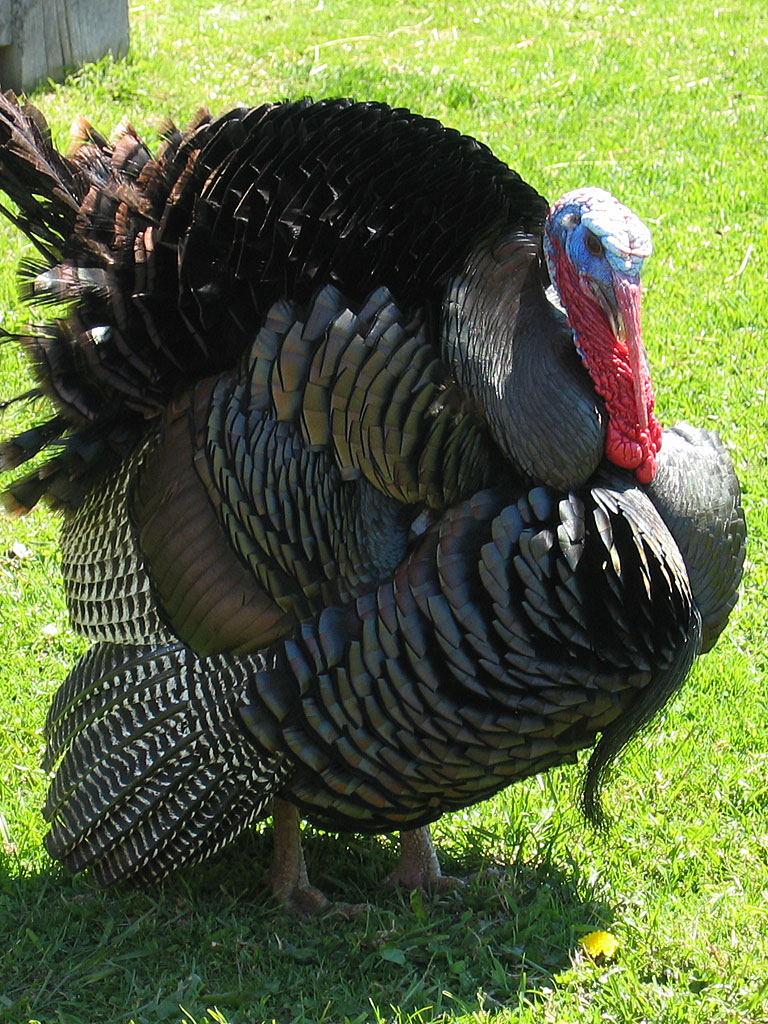
This turkey was most righteously pissed about something. He remained fluffed out the whole time we saw him.

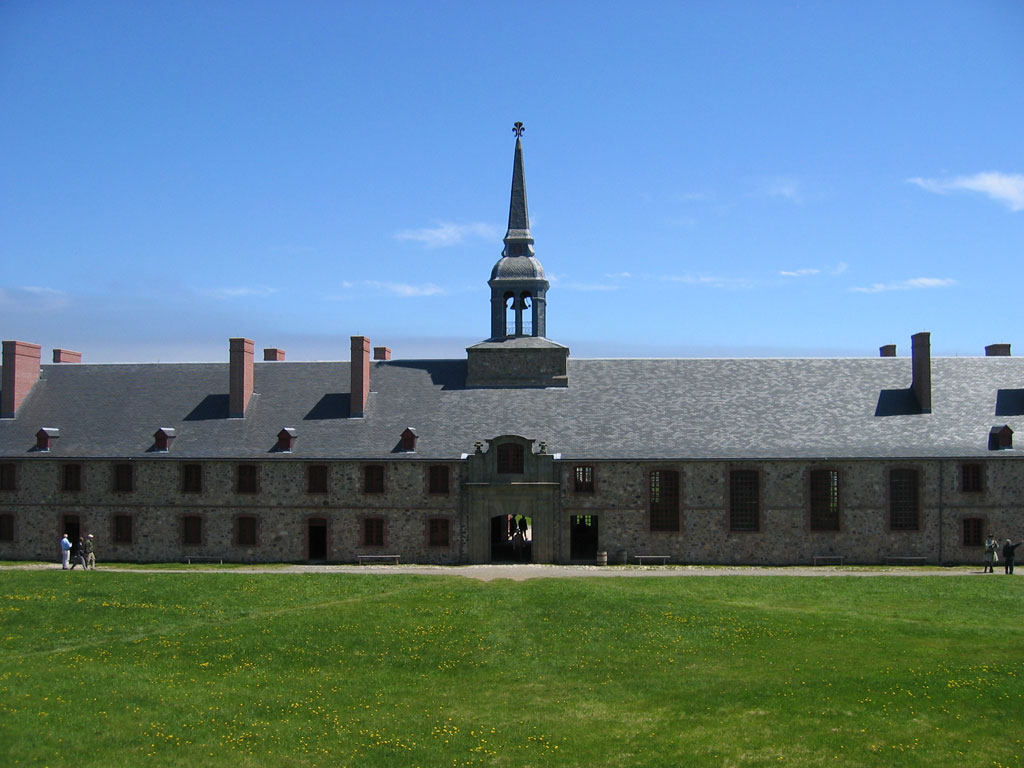
The main bastion (governor's residence, officers' residences, chapel, and some barracks) from inside the courtyard.

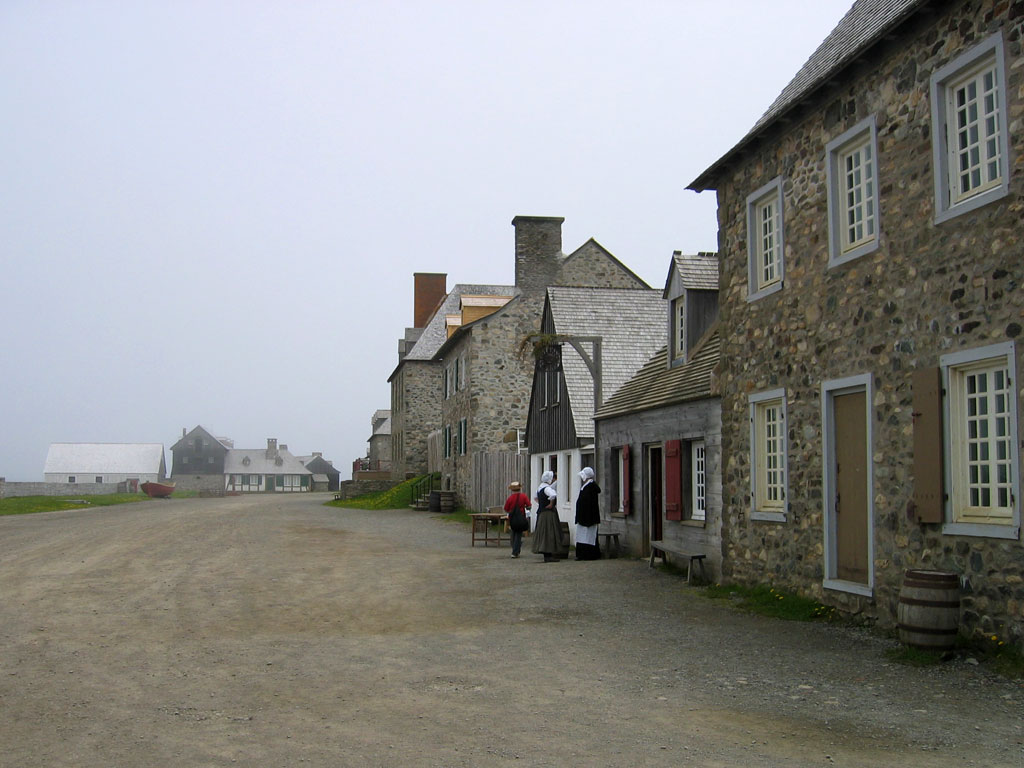
The main harbor-front street, with the fog starting to roll in.

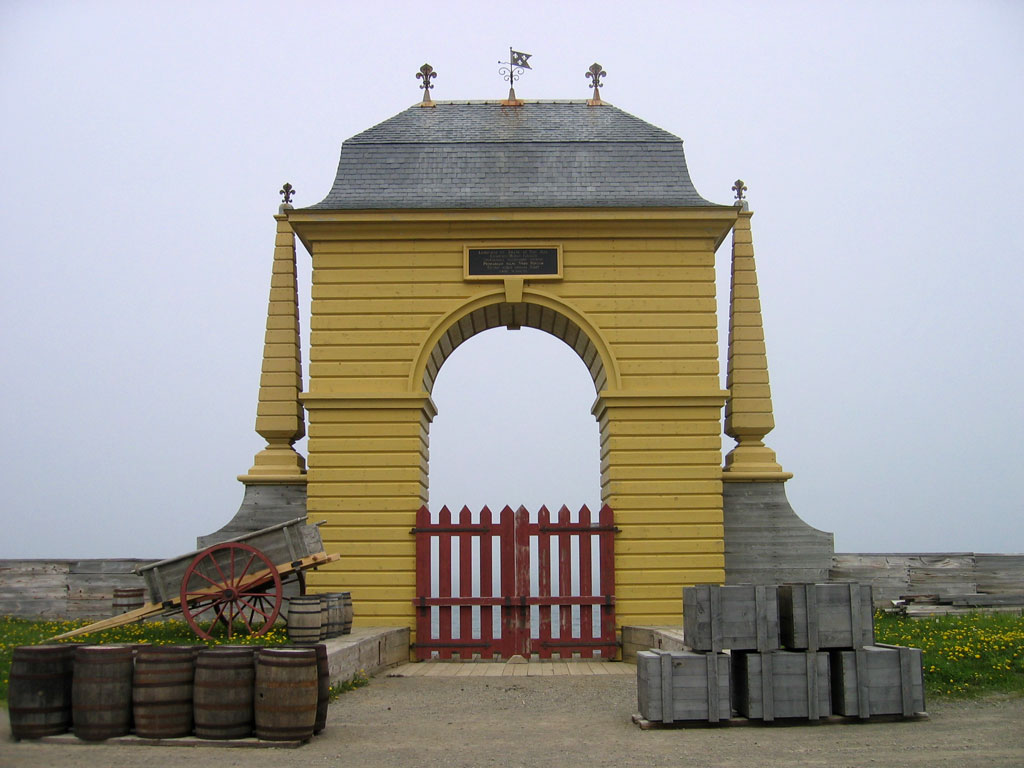
The main water-gate.

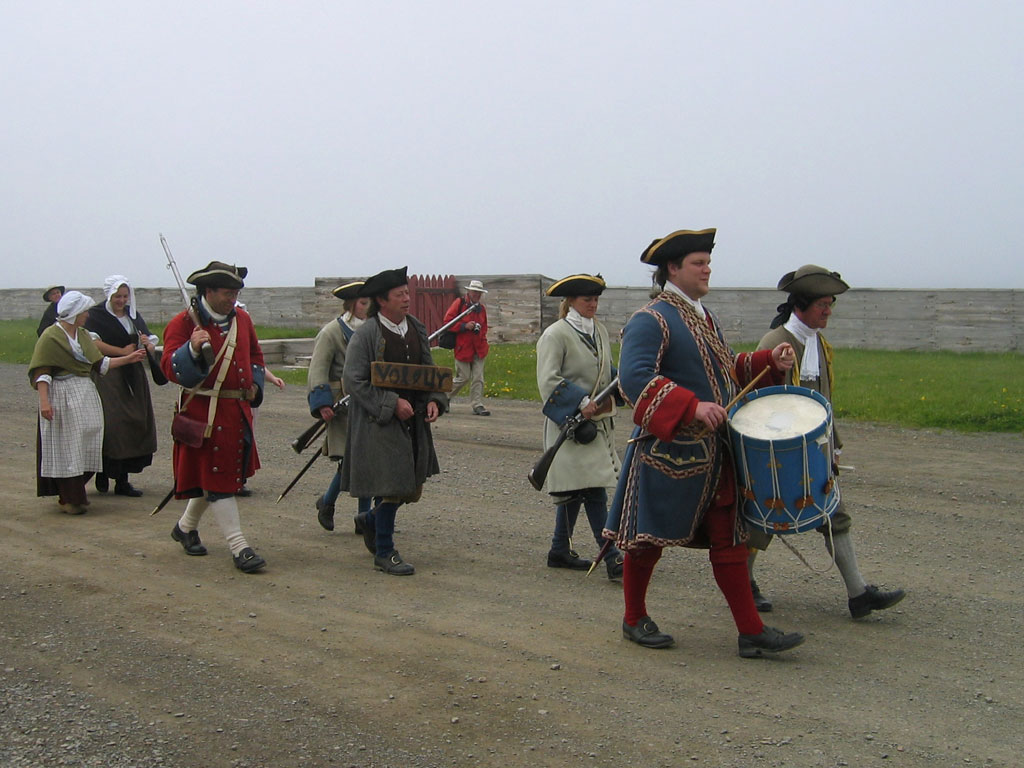
A bit of street theater. The prisoner (the placard says "voleur" - thief) is being paraded through town before a final sentence is proclaimed.

A Jacob ram.

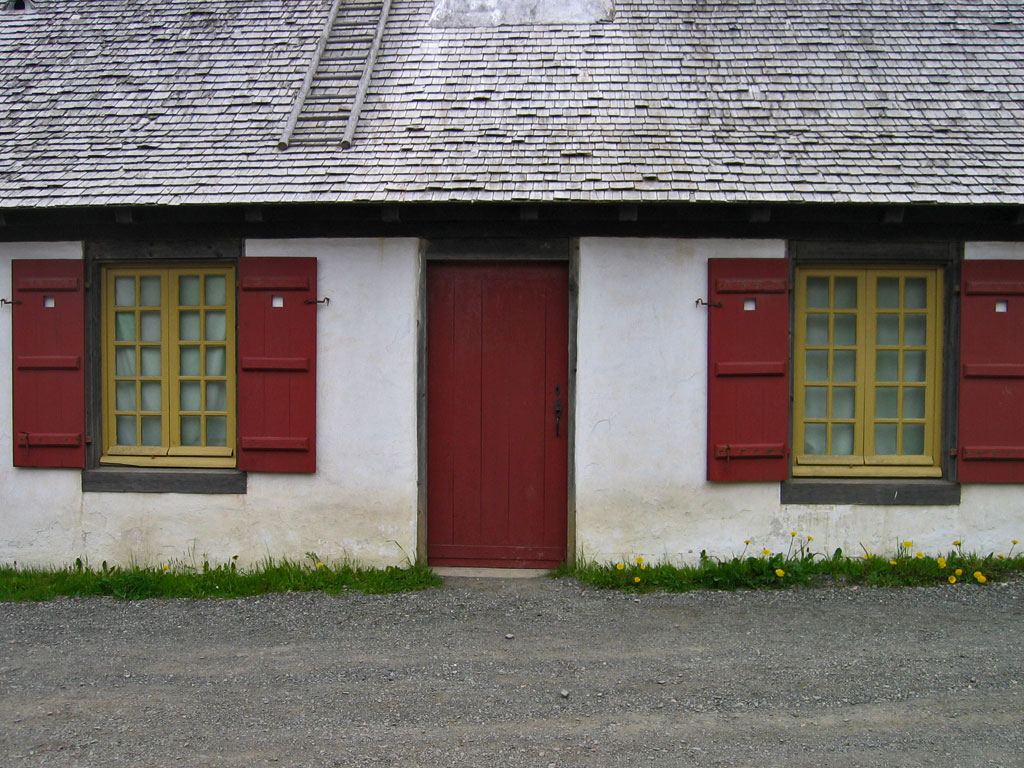
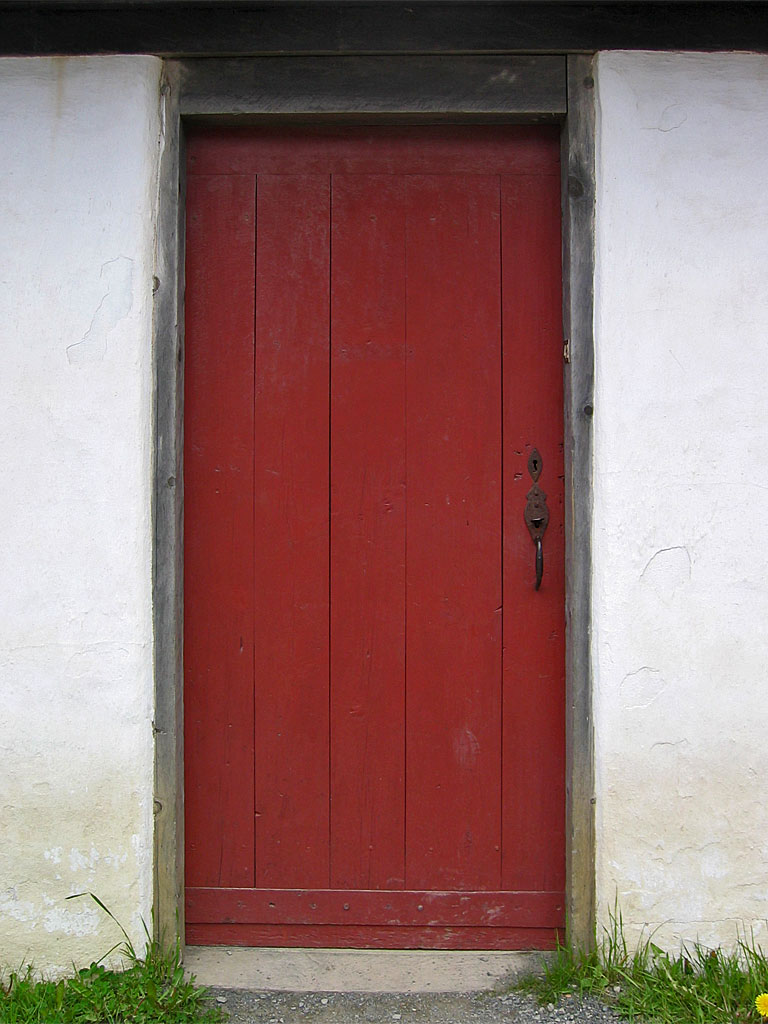
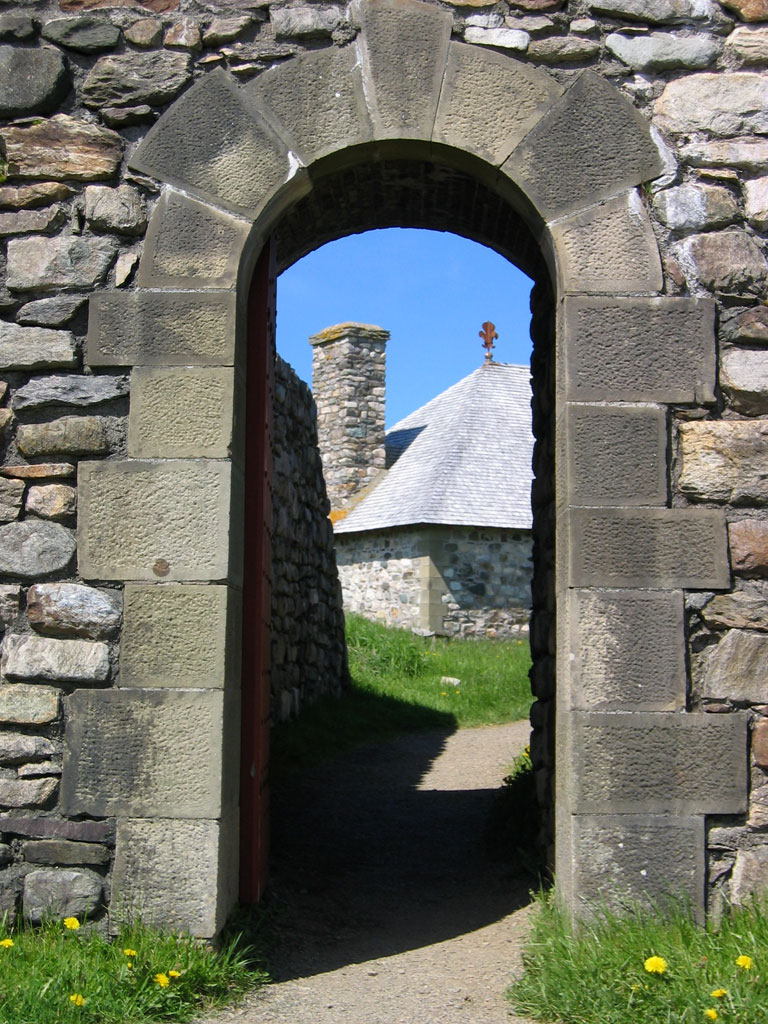
Finally, a bunch of shots for![[livejournal.com profile]](https://www.dreamwidth.org/img/external/lj-community.gif) doorwindowwall.
doorwindowwall.


Lots of pictures from Louisbourg. This French fortified town on Cape Breton (Île Royale) was an important fishing and trading port, and also the linchpin to the defense of the St. Lawrence River (Quebec and Montréal). However, it was perennially under-garrisoned, and weakly fortified on the landward side, so it was taken by the British (mostly New Englanders) in 1745, returned in the Treaty of Aix-la-Chapelle in 1748, taken again by the British in 1758, and blown up to prevent re-return to the French. (Not coincidentally, the British went on to take Quebec and Montréal.) There it lay for two centuries, until about a quarter of the town was reconstructed in the 1960's.
The 250th anniversary of the Second Siege of Louisbourg is currently being commemorated both here and in Halifax (the main British naval base in the region).
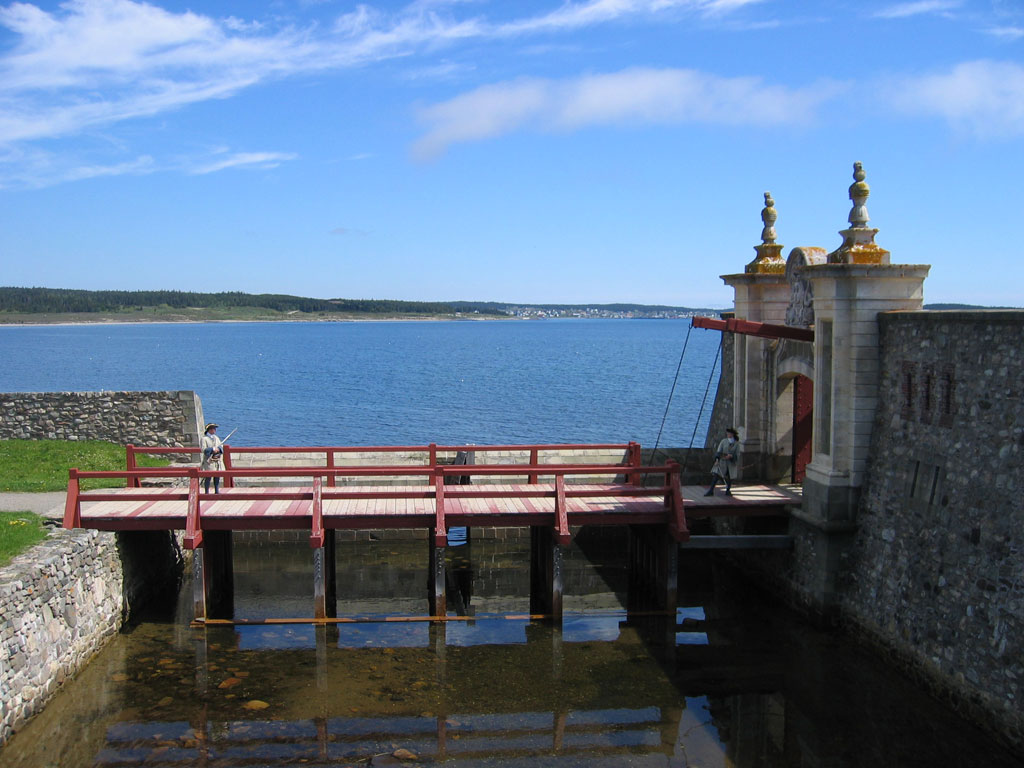
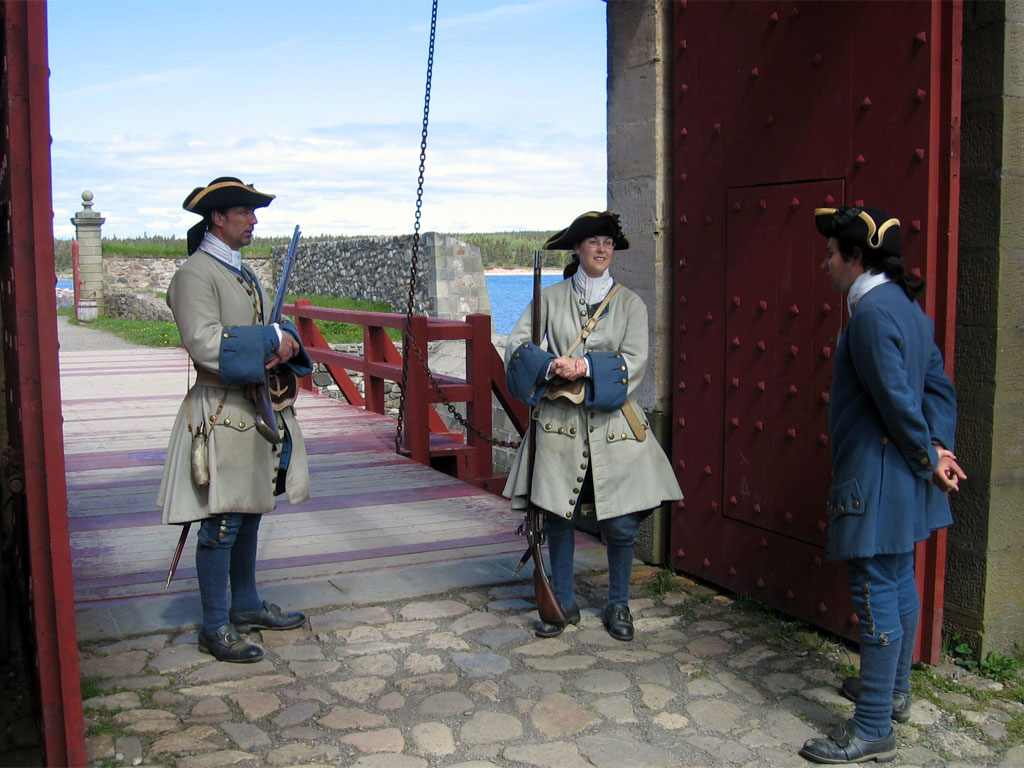
The seaward defenses.
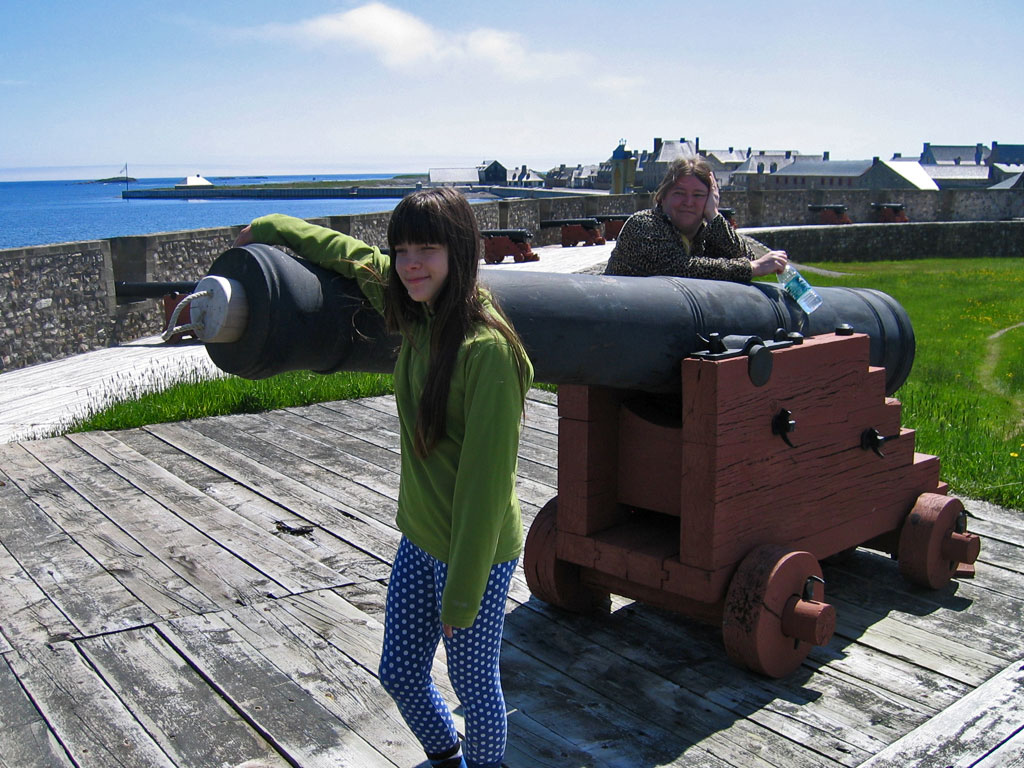
The landward defenses.
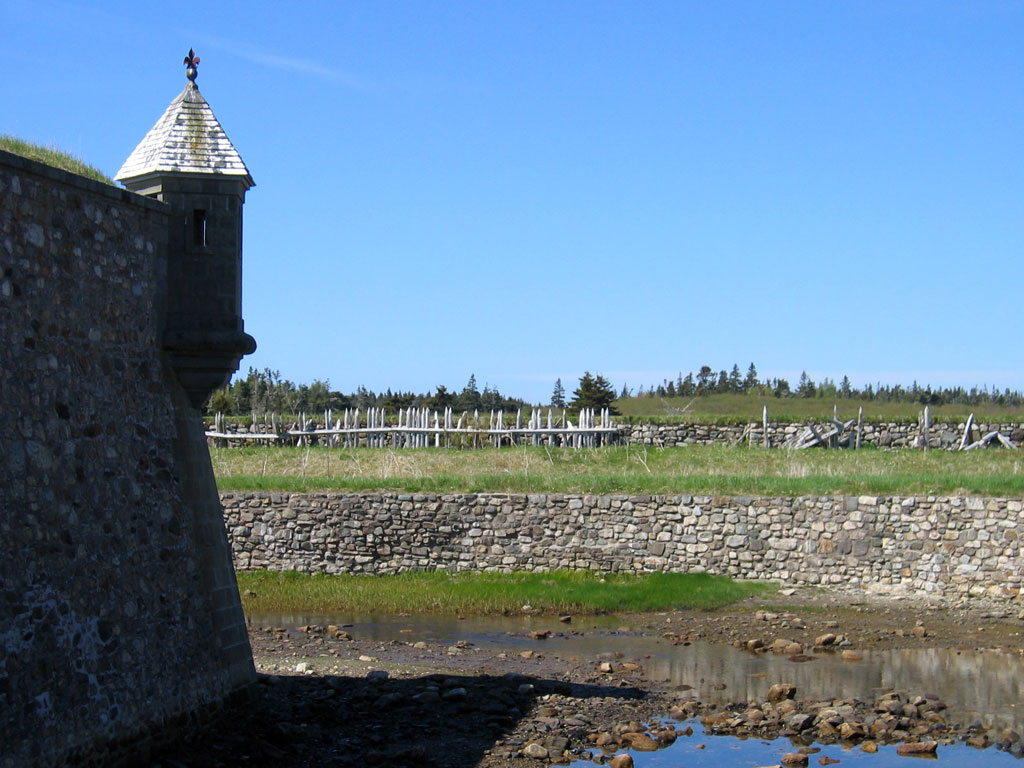
Fisherman's hut, actually outside the town walls.
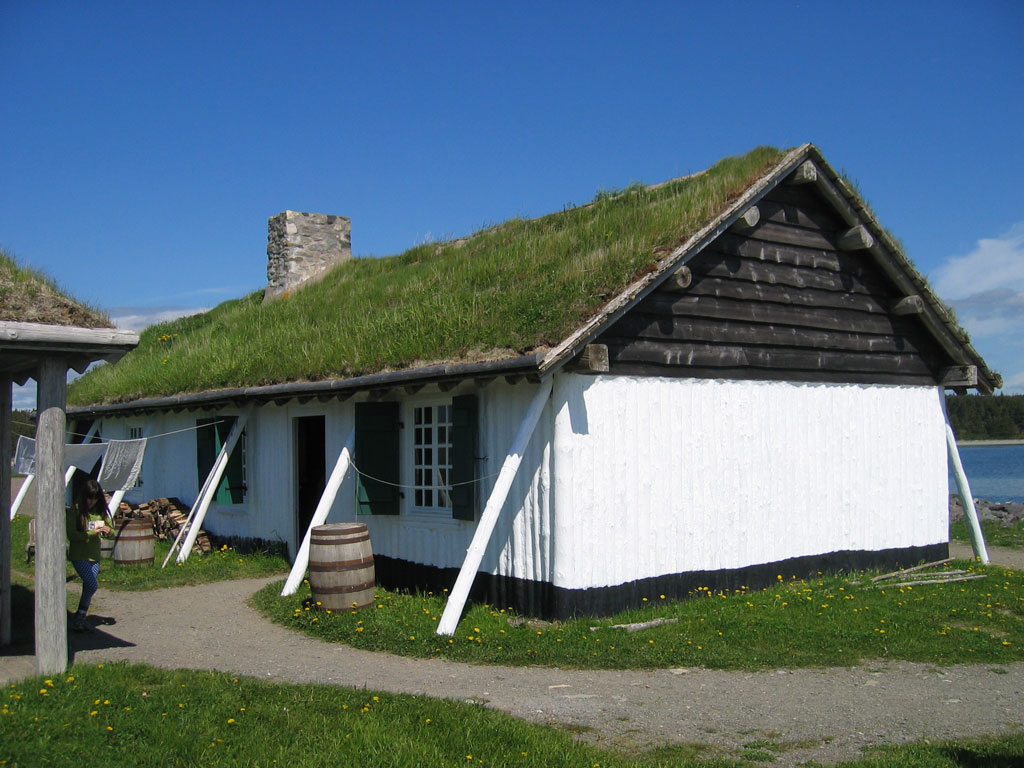
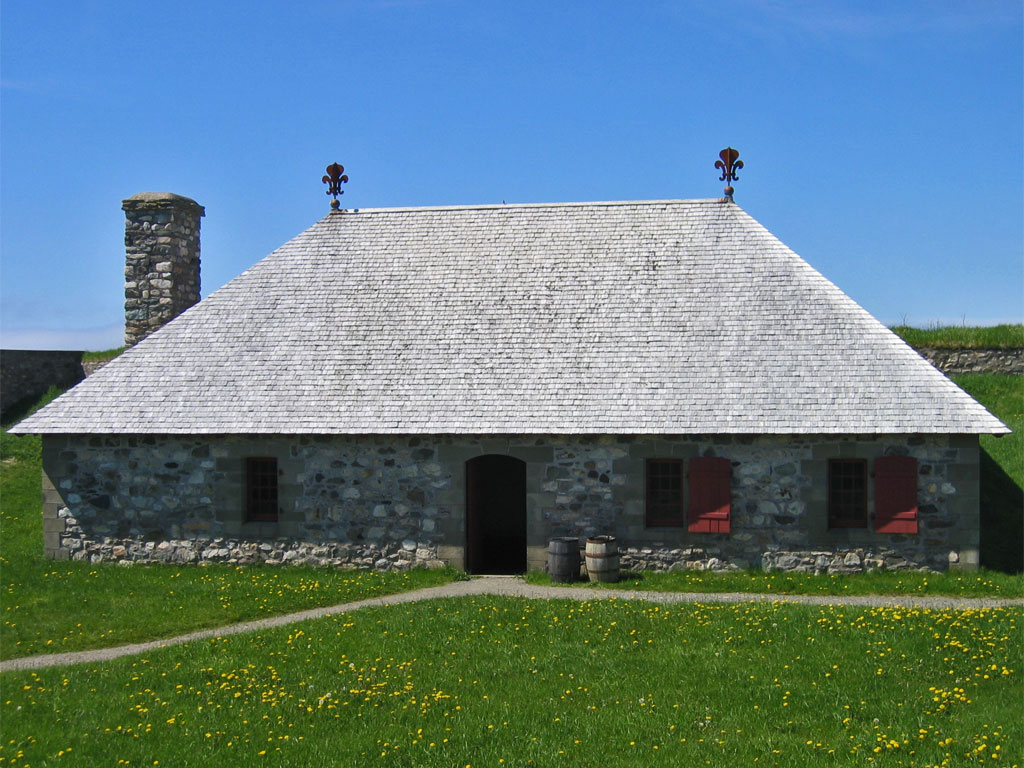
These are not wooden walls, but wooden sheathing over masonry walls, to protect the crappy 18th century-style lime mortar.

In the chapel. No, I don't know which saint this is, why he has a wound on his leg, or why the dog is carrying a sausage.
This turkey was most righteously pissed about something. He remained fluffed out the whole time we saw him.
The main bastion (governor's residence, officers' residences, chapel, and some barracks) from inside the courtyard.
The main harbor-front street, with the fog starting to roll in.
The main water-gate.
A bit of street theater. The prisoner (the placard says "voleur" - thief) is being paraded through town before a final sentence is proclaimed.
A Jacob ram.

Finally, a bunch of shots for
doorwindowwall.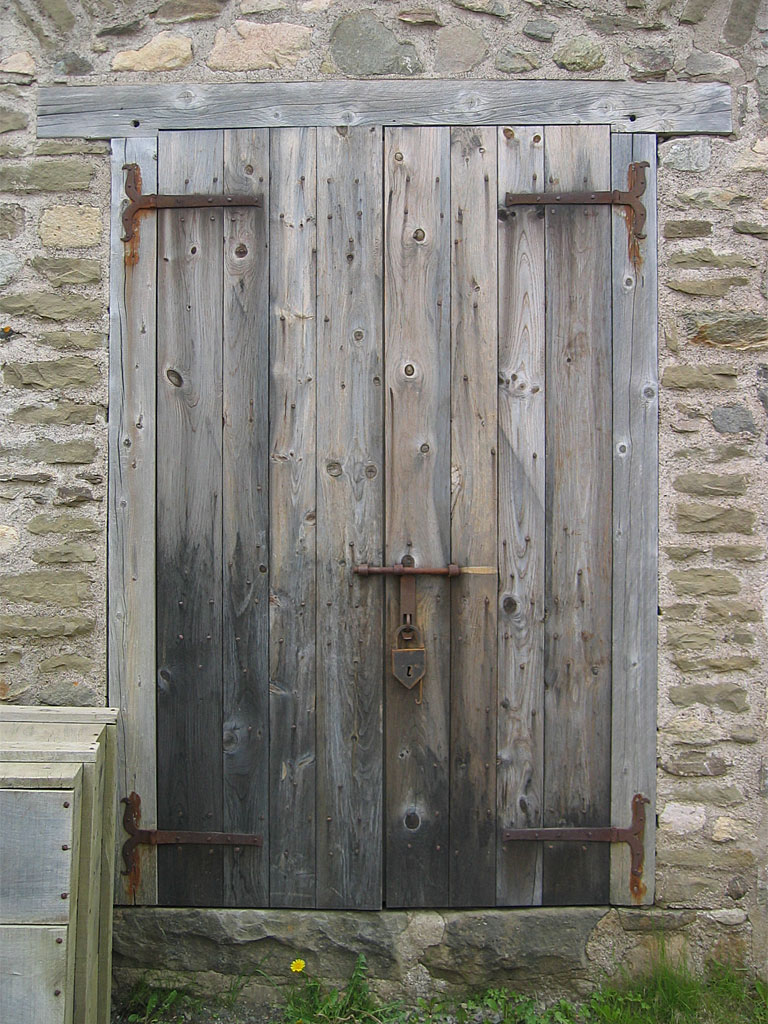




![[identity profile]](https://www.dreamwidth.org/img/silk/identity/openid.png)
no subject
Date: 2008-07-05 02:24 pm (UTC)no subject
Date: 2008-07-06 04:10 pm (UTC)no subject
Date: 2013-05-15 02:33 am (UTC)